Tuesday, March 1, 2016

I Love You Just Enough


I Love You Just Enough
By: Robbyn Smith van Frankenhuyzen
Illustrated by: Gijsbert van Frankenhuyzen
Published by: Sleeping Bear Press, 2014
Grade level: 3 and up
Fountas and Pinnell: M
Lexile: 740L
Accelerated Reader: 3.7

Suggested Delivery: Read Aloud
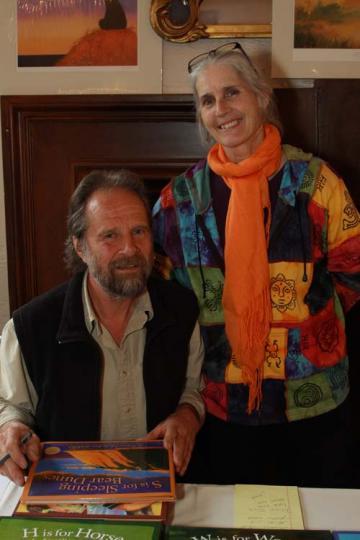
Author and Illustrator: Robbyn Smith and Gijsbert van Frankenhuyzen


Summary:

This is a marvelously heartwarming story of Heather and Mr. Peet young children will love.  The tale flowed beautifully as we follow Heather and Mr. Peet through the summer when she fosters him.  It's a joyous adventure for Heather as she learns about the special responsibility of caring for another creature.  She also learns that there is indeed a time of letting go.  The full-page, full-color artwork is beautifully expressive and captures the love Heather has for her charge.  It's a summer with a little wood duck that will stick in the minds of all who hear this tale.

Key Words/Phrases to Describe the Book:

1. Heartwarming

2. Caring

3. Letting go

4. Little wood duck

5. Vibrant illustrations

Key Vocabulary:

Wood Duck: a North American duck that nests in trees.

Meadow: a tract of grassland used for pasture or serving as a hayfield.

Responsibility: the state or fact of being answerable, or accountable forsomething within one's power, control, or management

Hunt: to chase or search for (game or other wild animals) for the purpose of catching or killing.

Prairie: a tract of grassland; meadow

Nature: the elements of the natural world, as mountains, trees, animals, or rivers

Resources:

An I Love You Just Enough illustration preview can be found on this YouTube website.  Before reading, students can take a sneak peak of all the full-page, vibrant pictures they will encounter while reading this book.
Learn about the author and illustrator on this website.  On this website, you can also view more breath-taking illustrations by Gijsbert van Frankenhuyzen.

Teaching Suggestions:

  • Ask students what they think the book will be about based on the cover illustration and the title
  • Have students write about a time when either they had to give up something for the better of someone else, or someone who loves them did that for them.  (can be as simple as sacrificing time to bring to a sporting event.)
  • Have students come up 3 different themes present in the book and give examples of each how each theme is presented.


Comprehension Strategies:

Before: Ask students what they think the book will be about based on the cover illustration and the title

During: Have students come up with a theme that they see developing throughout the story. And have them give examples of why they believe that is a theme in the story.

After: Have students write about a time when either they had to give up something for the better of someone else, or someone who loves them did that for them.  (can be as simple as sacrificing time to bring to a sporting event.)

Writing Activity:

After discussing as a class about the various themes presented in this book--the animal life cycle, relationships among species, taking responsibility, and letting go--have students pick one of those themes that is most interesting to them and have them write a few paragraphs discussing what the theme they chose means to them and why it is so significant in the book and in the real world.

Bibliography:

Frankenhuyzen, R. S., & Frankenhuyzen, G. V. (2014). I love you just enough. Sleeping Bear Press.


Wednesday, February 24, 2016

Fly Away


Fly Away
By: Patricia MacLachlan
Published by: Margaret K. McElderry Books, 2014
Grade level: 3 and up
Fountas and Pinnell: O
Lexile: 490L
Accelerated Reader: 3.2

Suggested Delivery: Read Aloud/Individual 

Author: Patricia MacLachlan

Summary:

Fly Away is the story of Lucy, a girl who says she cannot sing. Her little brother barely talks, but sings perfectly in tune when no one else is listening but Lucy. All Lucy wants to do is to be able to sing like the rest of her family, but she keeps that inside of her and treasures the moments she has with her little brother.  In the story, Lucy's little brother goes missing, and she knows she is the only one he will sing out to. Lucy must find her voice so she can sing their song and find her brother.

Key Words/Phrases to Describe the Book:

1. Singing

2. Family

3. Love

4. Brother-Sister bond

5. Blood is thicker than water

Key Vocabulary:

Sing: to perform a song or voice composition

Voice: the sound or sounds uttered through the mouth of living creatures,especially of human beings in speaking, shouting, singing, etc.

Family: a basic social unit consisting of parents and their children,considered as a group, whether dwelling together or not

Relationship: connection between persons by blood or marriage

Tradition: a long-established or inherited way of thinking or acting

Brave: possessing or exhibiting courage or courageous endurance

Resources:

To find out more about the author Patricia MacLachlan and other books she has written, visit this website!

A Q&A with author Patricia MacLachlan is also available, where you can see what other readers were curious about, and you can ask questions of your own.

Teaching Suggestions: 

  • Have students make predictions about what the book will be about based on the cover picture
  • Talk about the role of family and its significance in the story
  • Go over repetitive words that are being used throughout the novel-using those words, ask students if they can think of a theme for this book.

Comprehension Strategies:

Before:Have students make predictions about what the book will be about based on the cover picture

During: Bring attention to repetitive words that are being used throughout the novel-using those words, ask students if they can think of a theme for this book.

After: Have students talk about if they have ever been in a scary situation (like Lucy's family with the flood) and what helps them get through it (like Lucy's family sings).  Do they have something of sentimental value? Do they do something? Do they sing like Lucy?

Writing Activity:

The theme of family and the role of relationships is central throughout this novel.  Students will write in essay form about what family means to them.  Do they live with both parents? Do they have any siblings? Are they close with their grandparents? How does their living condition affect their family dynamics?

Bibliography:

MacLachlan, Patricia. Fly Away. New York: Margaret K. McElderry, 2014. Print.

Tuesday, February 23, 2016

Let It Shine: Stories of Black Women Freedom Fighters


Let it Shine: Stories of Black Women Freedom Fighters
By: Andrea Davis Pinkney
Illustrated by: Stephen Alcorn
Published by: HMH Books for Young Readers, 2013
Grade level: 3 and up
Fountas and Pinnell: Not Available
Lexile: 940L
Accelerated Reader: 5.5


Suggested Delivery: Read Aloud/Individual  
Author: Andrea Davis Pinkney


Summary:  

This is an entertaining and educational journey back through time. The stories accurately depict the changing face of America for all people. The author, Andrea Davis Pinkney, uses a combination of oral stories and historical facts to re-create the lives of ten African American women freedom fighters.  Among the list of women are Harriet Tubman and Rosa Parks. However, there is also a presence of many unknown women, such as Shirley Chisholm and Biddy Mason. The stories are quite diverse, covering a history of almost the entire 20th century. Some of these historical references include the signing of the emancipation proclamation, the peaceful demonstrations of the civil rights movement, and the Democratic Convention of 1968. There is one common, underlying goal of each story- inspiration. These women learned that justice comes from not only speaking, but doing.

Key Words/Phrases to Describe the Book:

1. Inspirational

2. Civil Rights Activists

3. Women's Rights

4. Powerful

5. Entertaining 

Key Vocabulary:

Emancipation Proclamation: Issued January 1, 1863 by President Abraham Lincoln, it declared "that all persons held as slaves" within the rebellious states "are, and henceforward shall be free."

Civil Rights Movement: The national effort made by black people and their supporters in the 1950sand 1960s to eliminate segregation and gain equal rights.

Activist: An especially active, vigorous advocate of a cause, especially apolitical cause.

Convention: A meeting or formal assembly, as of representatives or delegates, for discussion of and action on particular matters of common concern.

Abolition: The legal prohibition and ending of slavery, especially of slavery ofblacks in the U.S.

Segregation: the institutional separation of an ethnic, racial, religious, or otherminority group from the dominant majority.

Resources:

To get to know more about Andrea Davis Pinkney and other books she has written, visit this website!

The YouTube video Women of the Civil Rights Movement is an insightful clip to watch on the women talked about in this book.

Teaching Suggestions:

  • Have an open discussion about the Civil Rights Movement before reading the book.  Ask them what they know about it and why it is a significant part of American history.
  • Have students write down each women freedom fighter they learn about in the book and write next to their name what their purpose they served in the movement.
  • Have students write down Tier II and Tier III vocabulary after each section and write down their meaning.

Comprehension Strategies:

Before: Have an open discussion about the Civil Rights Movement before reading the book.  Ask them what they know about it and why it is a significant part of American history.

During: Have students write down Tier II and Tier III vocabulary after each section and write down their meaning.

After: Have students write about in essay form which women freedom fighter they found the most interesting.  Students must include supporting evidence from the text and write about what they learned about her.  

Writing Activity:

Have students write about in essay form which women freedom fighter they found the most interesting.  Students must include supporting evidence from the text and write about what they learned about her.  Afterward, have them share their essays with their peers.

Bibliography:

Pinkney, Andrea Davis. Let It Shine Stories of Black Women Freedom Fighters. (2013). Turtleback Books.

Monday, February 22, 2016

Clara Lee and the Apple Pie Dream


Clara Lee and the Apple Pie Dream
By: Jenny Han
Illustrated by: Julia Kuo
Published by: Little, Brown Books for Young Readers, 2011

Grade level: 3 and up
Fountas and Pinnell: Not Available
Lexile: 600L
Accelerated Reader: 3.4

Suggested Delivery: Individual
Author: Jenny Han
Illustrator: Julia Kuo


Summary:

Clara Lee is a fun, cute, book with wonderful illustrations and a fantastic message about being proud of who you are. Clara Lee lives with her parents, younger sister and Grandpa. She has a great imagination, a best friend and dreams of being the Apple Pie Princess. Like many kids her age, Clara learns how to enjoy the good days she has, and how to hold your head high during the bad days, when kids make fun of you, when you fight with a friend and get in trouble at home.

Key Words/Phrases to Describe the Book:

1. pageant 

2. family

3. Korean-American background

4. dream

5. determined

Key Vocabulary:

Mightiest: possessing great and impressive power or strength, especially on account of size.

Complimented: politely congratulate or praise (someone) for something.

Festival: an annual celebration or anniversary.

Teeny: tiny

Whoops: another term for oops

Bouncy: springy

Resources:

Jenny Han has her own website, giving her bio and different books she has written for kids of all ages.

Julia Kuo has a fun and vibrant about me page to get to know more about her as an illustrator of this novel.

Teaching Suggestions:

  • Ask students to highlight the cultural differences that are seen throughout the novel
  • Have students write down how their family life differs from Clara's.
  • Have students pick out one of their favorite passages in the book and have them write about what is significant about what they chose and why it's their favorite. 
Comprehension Strategies:

Before: Ask students what they think is meant by "the apple pie dream."  What do they know about apple pie and its correlation to America?

During: Have students make a character chart of Clara and all her family members and write short bullet points about each character as they read

After: Have students give this book a different title, and tell them to explain their reasoning behind the new title

Writing Activity:

The theme of family is so significant throughout this novel.  Have students write in a few paragraphs about what family means to them.

Bibliography:

Han, J., & Kuo, J. (2011). Clara Lee and the apple pie dream. New York: Little, Brown.

Sunday, February 21, 2016

out of my mind


out of my mind
By: Sharon M Draper
Published by Antheneum Books for Young Readers, 2010

Grade level: 3 and up
Fountas and Pinnell: S
Lexile: 700L
Accelerated Reader: 4.3

Suggested Delivery: Individual

Author: Sharon M Draper

Summary:

Eleven-year-old Melody is in a wheelchair and she cannot speak; therefore, people have always assumed that she is mentally challenged, although the opposite is true. She has a photographic memory, so her knowledge base is vast. When she is finally given the gift of language through the intervention of her caregiver and a school worker and can express herself, her intelligence is revealed.

Key Words/Phrases to Describe Book:

1. Don't judge a book by its cover

2. Heart-warming

3. Intense

4. Powerful

5. Inspiring

Key Vocabulary:

Amble: walk leisurely

Aroma: a distinctive odor that is pleasant

Astonished: filled with the emotional of overwhelming surprise

Bellow: shout loudly without restraint

Cerebral Palsy: a loss or deficiency of motor control with involuntary spasms caused by permanent brain damage present at birth

Drawl: a slow speech pattern with prolonged vowels

Resources:

Sharon M Draper's teen reads is a good online resource to find out more about the author and more of Draper's young adult reads. 

This website will help kids understand in more depth what Cerebral Palsy is.

Teaching Suggestions:

  • Go over Tier II vocabulary with students and have them use a few of those words to form original sentences 
  • Have the class have an open discussion about what cerebral palsy is and if they know anyone with cerebral palsy
  • Have students bullet point parts of the novel that surprised them and that they learned about the disease and the life of someone with the disease

Comprehension Strategies:

Before: Ask the class if they have ever heard of the disease cerebral palsy or know of anyone with the disease. Have an open discussion letting the students ask any questions they may have pertaining to the disease.  Have the same discussion about photographic memory.

During: Have students bullet point parts of the novel that surprised them and what they learned about the cerebral palsy as well as a photographic memory.

After: Students will write in essay form how living with a handicap disease yet being a gifted individual impacted Melody's social/academic life.


Writing Activity: 

Students will write a paper in the perspective of a student who has a physical handicap with a gifted mental ability just as 11 year old Melody had.  Something other than cerebral palsy and a photogenic memory.

Bibliography:

Draper, S. M. (2010). Out of my mind. New York: Atheneum Books for Young Readers.

Artemis Fowl: The Graphic Novel


Artemis Fowl: The Graphic Novel
By Eoin Colfer and Andrew Donkin
Illustrated by Giovanni Rigano and Paolo Lamanna
Published by Hyperion Books for Children, 2009

Grade level: 4 and up
Fountas and Pinnel: Not Available
Lexile: GN460L
Accelerated Reader: 3.6

Suggested Delivery: Independent Read
Author: Eoin Colfer

Author: Andrew Donkin
Illustrator: Giovanni Rigano


Summary:

Artemis Fowl: The Graphic Novel by Eoin Colfer and Andrew Donkin is about a boy named Artemis Fowl, a twelve year old who is one of the greatest criminal masterminds of the century.  Through this graphic novel, readers will be able to see and experience the underground fairy world, examine Foaly’s inventions, and follow their favorite character as this graphic novel is action packed and is designed with full-color panels. 

Key Words/Phrases to Describe the Book:

1. master-mind

2. mystery

3. crime

4. colorful

5. eventful

Key Vocabulary:

Imply: express or state indirectly

Ingenious: showing inventiveness or skill

Indignant: angered at something unjust or wrong

Discern: detect with the senses

Innovate: bring something new to the environment

Scrutiny: the act of examining something closely, as for mistakes

Resources:

Eoin Colfer's website may be a useful technological resource to use if you want to learn more about the author and his thinking process of transforming his original Artemis Fowl book into a graphic novel.

Get into the mind of Giovanni Rigano and listen to this novel illustrator answer questions from fellow Artemis Fowl fans about how he came about to design these graphics!

Teaching Suggestions:

  • Have students write whether they believe the graphics in the novel correlate well with the elements in the story
  • Have students underline/highlight tricky vocabulary words and have them write what they think that word means on a piece of paper using context clues
  • Have students discuss with their peers what they predict will happen next chapters based on what they have read thus far to work on their comprehension

Comprehension Strategies:

Before: Give a summary of the novel to the students.  Explain to students that there is a non graphic version of this novel.  Before reading, have them write a prediction as to whether they think having graphics in this novel will be beneficial or have a negative impact on the novel.

During: Have students highlight/underline Tier II vocabulary as they read, and have them write on the side what they think it means.

After: Have students go back to their before reading predictions, and write another paragraph or two saying if they agree or disagree with their original statements and why or why not.


Writing Activity:

The writing activity would be the before and after for the comprehension strategies.  Students will make predictions as to whether they think having graphics in this novel will be beneficial or have a negative impact on the novel.  And then after they read the novel, students will go back to their before reading predictions, and write another paragraph or two saying if they agree or disagree with their original statements and why or why not.

Bibliography:

Colfer, E., Donkin, A., & Rigano, G. (2009). Artemis Fowl. the graphic novel. New York, NY: Hyperion Books for Children.